

Close the year strong and ready for what’s next. Find practical ways to tidy your finances, improve cash flow, set clear goals, and use business loans to grow your business.
At a glance
- Review your finances before the year end to find out what’s working and what needs attention, so you can then set realistic goals for future growth.
- Simple tactics like following up invoices, running short promotions, or reviewing supplier terms can give your cash flow a boost and help build early momentum for the new year.
- Knowing your funding options helps you be ready to move when opportunities arise.
As the year winds down, many business owners are heading into one of their busiest periods, managing sales, meeting demand, and keeping staff organised. It might feel like the wrong moment to stop and plan for the future, but waiting until January will put you on the back foot. Taking time now to review your position and set your goals helps your business enter the new year prepared and ready to grow.
From cleaning up your finances and creating early momentum to exploring funding options that support new opportunities, this guide provides practical steps to help you start the year focused and in control.
Why planning your year-end finances matters
When you’re immersed in the daily running of your business, it’s easy to mistake ‘being busy’ with ‘being on track’. A year-end review gives you the space to step back and get a clear view of what’s working well and what needs attention.
Without that breathing space, small issues can spill into the new year and become harder to fix. You could face unexpected tax obligations or continue spending on a marketing channel that’s no longer delivering. A structured review can help you shift from reacting to planning. By reviewing your cash flow, estimating seasonal changes, and assessing your finances now, you can focus on growth rather than just keeping things moving.
Set clear financial goals for the year ahead
Once you have a clear view of where your business stands, it’s time to set a course for the year ahead. Effective goals are clear, measurable, achievable, and connected to your wider strategy, with a defined timeframe for reviewing progress.
A good mix of short-term goals, such as sharpening cash flow or tightening costs, and longer-term goals, like boosting profitability or exploring new markets, will help you grow sustainably.
Here are some examples to consider:
- Improve cash flow: Cut average payment times by 20% or set aside a month’s worth of operating expenses as a cash buffer.
- Increase revenue: Lift monthly sales by 10% by encouraging repeat customers or trialling new marketing activity.
- Reduce operating costs: Reduce ongoing costs by 5% by renegotiating supplier terms or cutting low-value subscriptions.
- Manage debt: Reduce your business debt by 10% while keeping the cash you need to run day to day.
- Invest in growth: Put funds toward one meaningful upgrade, such as new equipment, a digital system, or staff training that boosts long-term capacity.
Set targets that reflect your business history and what’s ahead, such as past profit patterns, upcoming seasonal demand, or new products you plan to launch. Relevant and measurable goals keep you accountable and make progress easier to track.
Easy ways to tidy up your finances
With your goals set, the next step is making sure your finances can support them. Strengthen your base by tightening processes, reducing waste, and giving yourself clear visibility over the information you rely on.
Here’s where to focus:
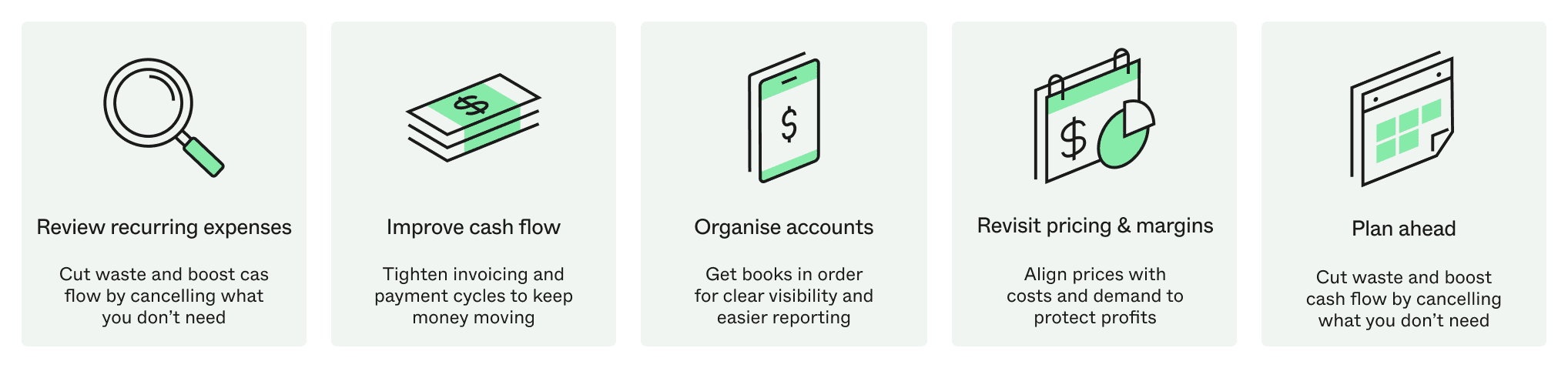
- Review recurring expenses: Go through regular costs and cancel anything that’s no longer delivering value. Even small monthly savings can strengthen your cash flow.
- Improve your cash flow: Review your invoicing cycles and payment terms to make sure you have funds available when wages, suppliers, and bills fall due.
- Organise bookkeeping and accounts: Ensure invoices, receipts, and statements are complete and up to date before the new year. Clean records make tax preparation easier and give you a more accurate view of performance.
- Revisit pricing and margins: Check whether your pricing still reflects current costs and market demand. Small adjustments can help protect profitability and soften the impact of future slowdowns.
- Plan for upcoming expenses: Outline the costs you know are coming, like rent, wages, and utilities, to build a clearer picture of your cash flow position.
Tidy up your finances

Taking control of your finances now positions you for a stronger year ahead and frees you up to focus on the opportunities that it will bring. Discover how business loans and financing options for New Zealand small businesses can help support your plans for growth.
Quick wins to start the new year right
Once your finances are in good shape, you can start building momentum. A few simple actions now can create early wins and set your business up for the months ahead.
Try these simple steps:
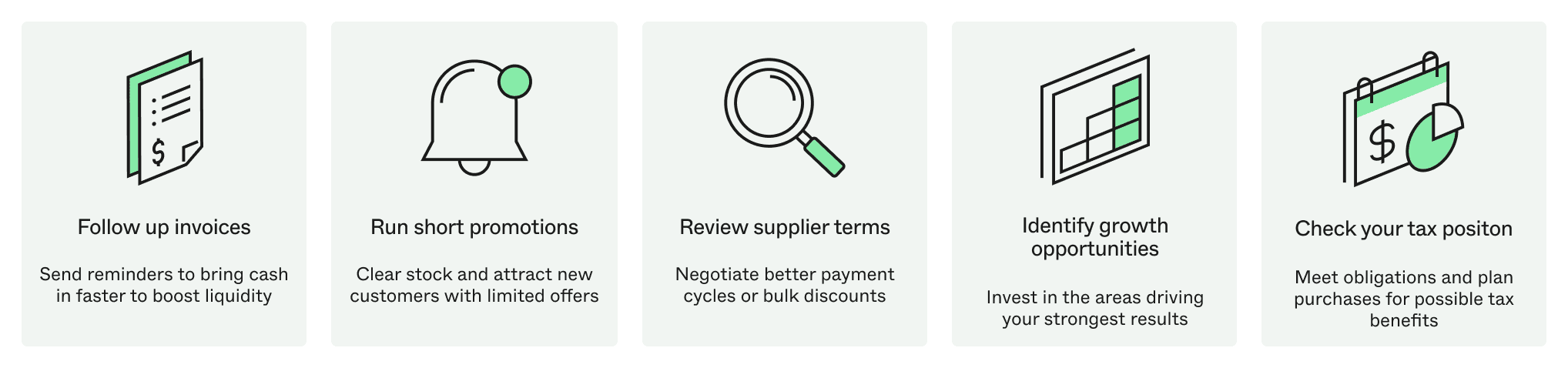
- Follow up outstanding invoices: Send a reminder or offer flexible payment options, such as instalments or early payment discounts, to bring cash in sooner.
- Run short promotions: For retail, hospitality, or service-based businesses, a focused offer can help move stock and bring in new customers.
- Review supplier terms: Negotiating improved payment cycles or bulk rates can ease early cash flow pressure.
- Focus on fast-growth opportunities: Review the products or services that performed well this year and look for ways to build on that momentum.
- Check your tax position: Make sure obligations are up to date and consider whether any end-of-year purchases could offer tax advantages in the new year.
Start the new year strong

Using financial products to support growth
Good financial planning also means understanding your funding options before you need to act. Whether you’re bridging a short-term cash flow gap, upgrading equipment, or moving quickly on a time-sensitive opportunity, the right solution helps you act fast without adding pressure to your daily operations.
A business line of credit offers flexibility for short-term needs, giving you access to funds when you need them rather than committing to a full lump sum. For larger investments, a small business loan or the Prospa Business Loan Plus for funding up to $500,000 can provide the capital to open a new location, purchase new equipment, or launch a new product line.
If you’re unsure which option is the best fit, our guide to choosing the right funding explains how each product works and what to consider.

RW Design co-founder Rachel Horan knows how important timing can be when new opportunities appear. When the business needed to upgrade its website and better manage seasonal cash flow, banks weren’t making it easy. With support from Prospa, Rachel accessed a Small Business Loan and a Business Line of Credit that helped smooth out cash flow and build capacity for the future. “Prospa just made it easy. As a business owner, you don’t have time for endless paperwork and back-and-forths. They understood what we needed and got us sorted quickly.” – Rachel Horan, RW Design |
|---|
Get your business ready for what comes next
A new year is a chance to reset and plan ahead. By setting clear goals, strengthening your financial position, and exploring funding options that match your needs, you can enter the year focused, prepared, and ready to grow.
With funding options designed for different stages of business growth, Prospa’s range of loans can help you start the new year on the right track.